
Two-Prong Outlets: Can You Swap Them for Three-Prong?
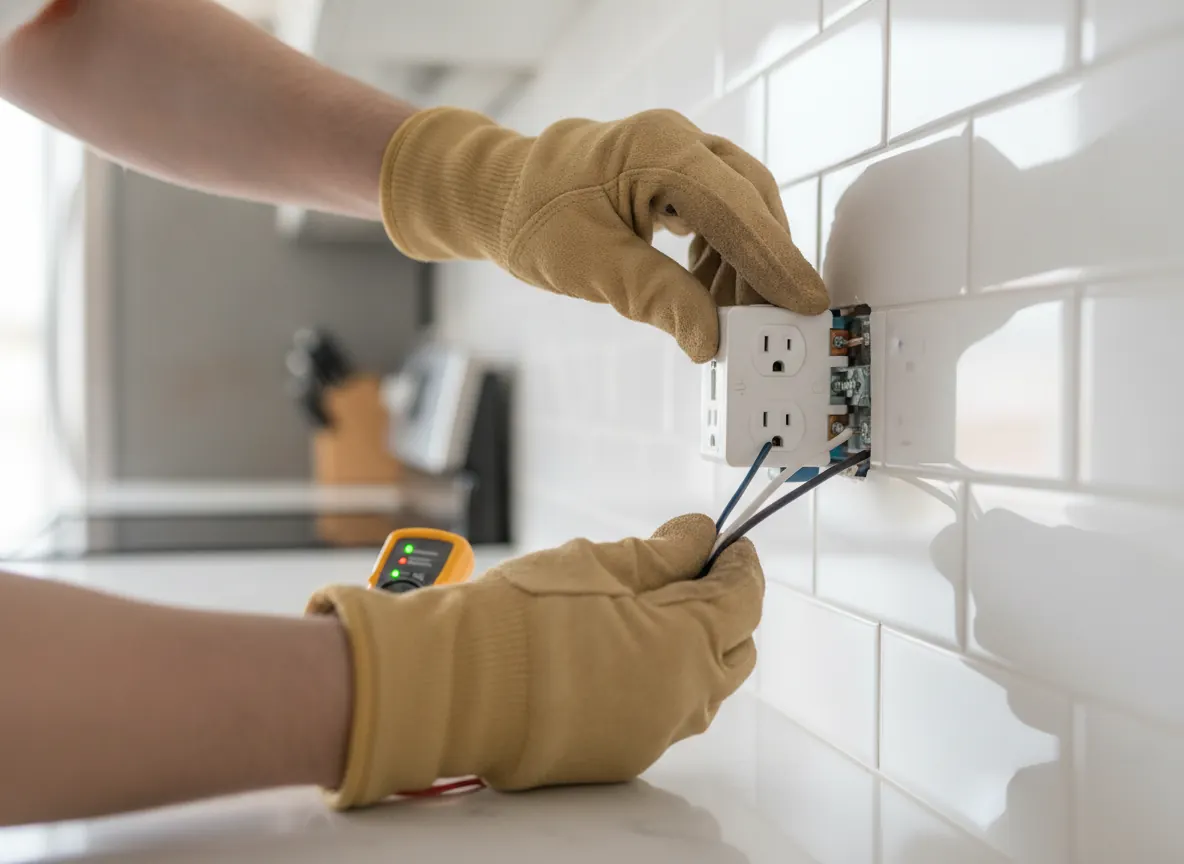
Short answer: you can't just swap a two-prong outlet for a three-prong one unless there is a ground wire to connect to. Without a ground, the third hole does nothing and can fool you into thinking the outlet is grounded. The usual code-recognized options are to run a ground, protect the outlet with a GFCI and label it "No Equipment Ground," replace it with another two-prong outlet, or rewire the circuit. A licensed electrician can tell you which fits your home in Lubbock, TX.
Why do some Lubbock homes still have two-prong outlets?
Two-prong outlets were standard before grounded outlets became common in homes, roughly through the early 1960s. Lubbock has a lot of housing from that era. In ZIP code 79410, which takes in Tech Terrace and the Overton side of town, the median home was built in 1957 and 27.4% of homes predate 1950 (ACS 2020–24 5-year). In Slaton, the median year built is 1963, and 80.4% of homes were built before 1980. Heart of Lubbock and Rush have plenty of homes from the 1950s and 1960s too.
That doesn't mean any given house has ungrounded outlets. Many have been updated over the years, sometimes room by room. A mix of two-prong and three-prong outlets in the same house is common.
Can I replace a two-prong outlet with a three-prong outlet?
Only the right way. Here are the usual options, from least to most work:
| Option | What it does | Good to know |
|---|---|---|
| Replace with a new two-prong outlet | Keeps the outlet working as it was | Simple, but three-prong plugs still won't fit |
| GFCI outlet labeled "No Equipment Ground" | Adds shock protection and accepts three-prong plugs | Does not create a ground; surge protectors and some electronics still won't be grounded |
| Add a ground wire to the outlet | Gives a true equipment ground | The electrician runs a ground to an approved grounding point; access varies |
| Rewire the circuit | New grounded cable for the whole run | Most work; often part of a larger update |
One GFCI at the start of a circuit can protect the outlets after it, which can make the GFCI option affordable for a whole room. Each protected outlet still needs its label.
Avoid the "bootleg ground." A jumper from the neutral to the ground screw makes a cheap outlet tester read "correct" while leaving no real ground. It can put voltage on the metal case of an appliance if something goes wrong. If you buy an older house, ask the electrician to check for it.
Why the ground matters
The ground wire gives fault current a safe path back to the panel, so a breaker trips instead of a metal case becoming live. Three-prong appliances, computers and many surge protectors are designed around that path. A plug strip surge protector on an ungrounded outlet has little to send a surge into. If you are thinking about surge protection, read about whole-home surge protection, which works at the panel.
A GFCI works differently. It watches for current leaking out of the circuit and shuts off fast, which protects people from shock even without a ground. That is why code accepts it as a replacement option. It does not replace a ground for equipment.
Signs it's more than an outlet swap
Two-prong outlets often travel with other older-home issues. Call a licensed electrician rather than replacing devices yourself if you notice:
- Outlets or switch plates that feel warm, or any burning smell
- Cloth-covered or brittle wire insulation when a cover plate is off
- Outlets that work loosely, with plugs that fall out
- Breakers or fuses that trip often, especially on summer afternoons
- Silver-colored wire, which may be aluminum branch wiring from the 1965 to mid-1970s era (CPSC)
Our post on older home electrical warning signs goes through each of these. For wiring problems, the rewiring and aluminum wiring page explains the repair options.
What does it cost to update two-prong outlets?
Published cost guides put a GFCI outlet at about $130–$300 installed (avg ≈ $210, Angi 2026). The homeyou Lubbock page lists outlet repair or replacement at $86–$694 (Nov 2026). Adding a ground wire or rewiring depends on access to the walls and attic, so get a written quote. Estimates, not quotes. See the Lubbock electrician cost guide for more ranges, and the outlets, switches and GFCI page for details on the work.
Renters and landlords
If you rent, don't change outlets yourself. Texas's owner-resident exemption for electrical work doesn't cover tenants. Ask your landlord in writing to have outlets checked or updated. Texas Property Code §92.052 requires a landlord to make a diligent effort to repair conditions that materially affect a tenant's health or safety after notice, and an electrical hazard may be such a condition. This is not legal advice. Landlords should hire a licensed contractor; the rental electrical inspection page lists what an inspection can cover.
Before you hire
Texas requires electrical contractors and electricians to be licensed by TDLR (Occupations Code Ch. 1305). Check any license at tdlr.texas.gov/LicenseSearch and look for the contractor's TECL number on the truck and the written proposal. Ask for a written, itemized quote that lists each outlet and the method used (GFCI, new ground or rewire), and ask whether there is a trip or diagnostic fee.
About this site: Lubbock Electrician Pros is a free quote service, not an electrical contractor. It does not perform electrical work. You describe the job once, and independent, licensed electrical contractors serving Lubbock, TX and nearby towns can reply with quotes. The contractor you choose quotes, permits and does the work directly with you. Request free quotes.
Frequently asked questions
Is it illegal to have two-prong outlets in Texas?
Existing two-prong outlets are generally allowed to stay. When one is replaced, the code calls for a recognized option such as a GFCI labeled No Equipment Ground, a new ground, or another two-prong outlet. A licensed electrician can confirm what applies in your city.
Does a GFCI make a two-prong outlet safe?
A GFCI adds shock protection and lets you use three-prong plugs, but it does not add a ground. Equipment that depends on a ground, such as many surge protectors, still won't be grounded.
Can I just use a three-prong adapter?
An adapter only provides a ground if its tab is connected to a grounded box, which is rare in older homes. Treat it as a short-term fix and have an electrician recommend a permanent option.
How much does it cost to ground an outlet?
It depends on how the electrician can reach a grounding point, so there is no reliable flat price. Get a written, itemized quote. For comparison, a GFCI outlet runs about $130–$300 installed in national cost guides.